In our quest to build a lean, muscular body, we often look to a variety of sports supplements to help add a positive angle to our weight training programs.
Let’s face it, we all want to reach our goals as fast as possible and if we can get there with the help of supportive sports supplements, we’re gonna take it.
Whether it be protein powders, vitamins, or creatine, all things being equal, we all want to find that combination of supplements that will help unleash some of our muscle building potential.
The muscle building supplement industry is a multi million dollar industry that directly targets the active weight trainer as the buyers of these products. The list of muscle building supplements is a long one and it grows each and every week with no signs of slowing down.
Near the top of that list are natural testosterone enhancer’s and boosters. The growth of these supplements have grown by leaps and bounds over the past 15 years.
Today, there are literally hundreds of different brands and products with a variety of ingredients and mixtures. These products are not only popular with the active weight trainer but also with the huge baby boomer market.
What are natural testosterone enhancer’s / boosters?
Please keep in mind that when I mention natural testosterone boosters, I’m talking about over the counter formulas and not the illegal kind (Anabolic steroids).
Testosterone enhancer’s are meant to do just that, help stimulate / boost the release of free testosterone in the body. To the active weight trainer looking to build lean muscle mass, this is an ideal situation. We all know that testosterone is a male sex hormone whose primary role is the development of male reproductive organs. It also is responsible for the development of certain male characteristics such as increased bone mass, muscle mass, libido, deepening of the voice, and body hair growth among others.
With an increase in testosterone, or more importantly, free testosterone levels, there is a higher chance of retaining those male enhancing characteristics of testosterone. This can also mean a higher chance of increased muscle growth.
I’m not going to get into the actual science here, but suffice to say, testosterone builds lean muscle mass. Bodybuilding.com has a great article on testosterone and you can read about it here.
It only makes sense that the more free testosterone we have in our body, the more lean muscle mass we can build, right? This is a good question because as active weight trainers, we want to know if natural testosterone enhancer’s can help build more muscle mass and strength.
This is the key. It’s one thing to ask if these products actually stimulate an increase of free testosterone, but it’s another to ask if they work when it comes to building muscle and strength (Altering body composition). Basically there are some key questions to ask if you are interested in using natural testosterone enhancer’s / boosters.
• Does the natural testosterone booster work in terms of improving natural testosterone levels in the body?
• Has the natural testosterone booster been proven to work in terms of building muscle and strength levels? And;
• Most importantly, has the testosterone booster been proven by 3rd party, non bias clinical studies in improving strength and muscle levels?
Of course, not all natural testosterone boosters include the same ingredients. Although some use a single source ingredient, most have a combination of active ingredients. I’ve actually tried 5 different brands of natural testosterone boosters giving each, about 6 to 8 weeks of steady use. I’d like to go over some of the results and examine some of the active ingredients used in these formulas to find out if they actually worked.
Do Natural Testosterone Booster’s Work When It Comes To Building Muscle?
When it comes to natural testosterone boosters, we need to ask one very important question. Does the product work when it comes to affecting overall body composition. More specifically, does the product positively affect lean body tissues?
Most of the products I’ve examined all make certain claims about it’s testosterone raising properties. That’s fine and there are products that will affect natural testosterone levels - To a certain extent. However, it’s a whole different ball game when a claim is made about affecting lean tissue mass and strength levels due to a raise in testosterone levels.
If you’ve ever taken a look at some of the more popular testosterone boosters, you will notice some pretty outlandish claims such as “Increase free testosterone levels by 300%!!” Or “Maximize muscle growth by as much as 200%!!”. All in all, most of these claims are unsubstantiated with little or no conclusive evidence to back up the claims.
First of all, do these products raise base levels of serum testosterone levels?
Based on the research I’ve done, most of these ingredients do very little to raise testosterone levels. If they do, the amount of increase is minimal at best. Let’s take a look at some of the more popular ingredients in the more popular brands:
1) ZMA - Zinc monomethionine aspartate and Magnesium Aspartate
Originally developed by Victor Conte of BALCO Laboratories, it is a mixture of zinc, magnesium and vitamin B6. ZMA is a main ingredient is more than a few formulas I’ve used and examined. Thought to increase testosterone and strength levels, ZMA has NOT been shown to do either.
I’ve looked at the following studies, done by third party analysis, and there seems to be no conclusive evidence that this product actually works..
Study # 1 - Effects of Zinc Magnesium Aspartate (ZMA) Supplementation on Training Adaptations and Markers of Anabolism and Catabolism
Study completed by: Colin D Wilborn, Chad M Kerksick, Bill I Campbell, Lem W Taylor, Brandon M Marcello, Christopher J Rasmussen, Mike C Greenwood, Anthony Almada, and Richard B Kreider
The study examined the anabolic affects of supplementing with ZMA. In a double blind test, 42 resistance trained athletes were either given a placebo or ZMA 30 to 60 minutes prior to retiring for bed for an 8 week period.
Test subjects performed strength tests at 0, 4, and 8 weeks into the trial. Body composition was also measured in the test. At the completion of the study, there were no significant changes in either body composition or strength levels.
According to the study “Results indicate that ZMA supplementation during training does not appear to enhance training adaptations in resistance trained populations.”
A summary of the study can be viewed here.
Study # 2 - Serum testosterone and urinary excretion of steroid hormone metabolites after administration of a high-dose zinc supplement
Study completed by: K Koehler, M K Parr, H Geyer, J Mester and W Schänzer
The study examined whether or not, ZMA supplementation increased serum levels of testosterone. 14 male test subjects were chosen. Each subject, aged 22 to 33 years of age have been following a regular exercise regime.
The results revealed increased levels of serum zinc levels but no increase in serum total or serum free testosterone levels.
A summary of the study can be viewed here.
Based on the evidence, ZMA doesn’t seem to have any noticeable impact on 1) Elevating testosterone levels; Or 2) Improving overall body composition (Lean muscle tissue).
2) Tribulus terrestris
Tribulus terristris is a very popular ingredient among natural testosterone boosters and one you will find in most formulas. This a widely used supplement and has been very popular for quite some time. In fact, I can remember tribulus terrestris being very popular back in my early body building days of the late ‘80's.
This is a somewhat controversial supplement because it has often been accused of being a “steroid” and more often than not, very misunderstood. Widely used in herbal medicine, tribulus terrestris has been used in traditional Chinese and Ayurveda medicine as a diuretic and aphrodisiac.
For the past 20 years, supplement companies have used tribulus terrestris as a testosterone booster claiming it to have muscle building properties. The question is whether or not tribulus terrestris actually 1) Elevates testosterone levels; And 2) Improve overall body composition and strength levels.
Let’s take a look at the studies.
Study # 1 - Sexual effects of puncturevine (Tribulus terrestris) extract (protodioscin): an evaluation using a rat model
Study completed by: Gauthaman K, Ganesan AP, Prasad RN
The study examined 40, sexually mature male rats, divided into 4 groups. The first group of rats acted as a control group while the remaining rats received the following dosages of tribulus terrestris extract:
• Group 2 - 2.5 mg per kg of body weight;
• Group 3 - 5 mg per kg of body weight;
• Group 4 - 10 mg per kg of body weight
The test subjects were provided daily, oral doses of tribulus terrestris.
The results revealed an increase in body weight for each of the test groups in comparison to the control group. Group 2 experienced a 9% increase, while groups 3 and 4 experiences a 23% and 18% increase, respectively. Sexual activity also increased in groups 2, 3 and 4 in comparison to the control group.
A summary of the study can be viewed here.
Study # 2 - The effect of five weeks of Tribulus terrestris supplementation on muscle strength and body composition during preseason training in elite rugby league players.
Study completed by: Rogerson S, Riches CJ, Jennings C, Weatherby RP, Meir RA, Marshall-Gradisnik SM
The study examined the body composition effects of 5 weeks of tribulus terrestris supplementation on 22 elite male rugby players. Each were randomly assigned, in a double blind study, either 450 mgs of tribulus terrestris or a placebo, given once per day in an oral manner.
After 5 weeks, each subject provided a strength test and urine test to examine the supplementation effects. There were no effects on strength levels or alterations in body mass composition after supplementation.
The study concluded “ It was concluded that T. terrestris did not produce the large gains in strength or lean muscle mass that many manufacturers claim can be experienced within 5-28 days. Furthermore, T. terrestris did not alter the urinary T/E ratio and would not place an athlete at risk of testing positive based on the World Anti-Doping Agency's urinary T/E ratio limit of 4:1.”
The results of the study can be seen here.
Study # 3 - The aphrodisiac herb Tribulus terrestris does not influence the androgen production in young men
Study completed by: Neychev VK, Mitev VI
The study examined the effects of tribulus terrestris supplementation on 21 young healthy males between the ages of 20 and 36 years of age. The test subjects were divided into 3 groups. The first group being the control group were given a placebo. The second group were given 20 mgs per kg of body weight and the third were given 10 mgs per kg of bodyweight. The two groups were given 3 separated daily doses for 4 weeks.
At the end of the study, there was no significant differences in testosterone levels between the control groups and tribulus terrestris supplemented groups. All results were in the normal range.
The study concluded that “The findings in the current study anticipate that Tribulus terrestris steroid saponins possess neither direct nor indirect androgen-increasing properties.”
You can view the results of the study here.
Based on the evidence, it seems that tribulus terrestris only works in the lab, and on rats. Human trials haven’t revealed a whole lot of positive evidence that this stuff actually works. I don’t hold a whole of confidence in this particular supplement and will wait until more evidence unfolds before recommending this product.
3) Fenugreek (Trigonella foenum-graecum)
Often used in testosterone boosting formulas, this supplement is often referred to as “testofen”. Traditionally used as a herb and spice, it is used to help women improve milk production in lactating women and to reduce arthritis inflammation.
Until recently, fenugreek has been picked up by some of the more popular supplement companies and included in their testosterone boosting formulas. Does it work? Let’s take a look at the studies.
Study # 1 - Physiological Aspects of Male Libido Enhanced by Standardized Trigonella foenum-graecum Extract and Mineral Formulation
Study completed by: Steels E, Rao A, Vitetta L
In a double blind, placebo controlled experiment, 60 healthy males between the ages of 25 and 52 were either given 600 mgs of fenugreek or a placebo on a daily basis. The study lasted 6 weeks.
Fenugreek had an overall positive effect on increased libido. Now, I know this doesn’t have a lot to do with changing overall body composition but the conclusion of the study is what interested me.
According to the study, “It was concluded that Testofen demonstrated a significant positive effect on physiological aspects of libido and may assist to maintain normal healthy testosterone levels.”
This statement peaked my interest in Fenugreek and I decided to look for more evidence. So I went looking for more evidence and came across the following study:
Study # 2 - The Effects of a proprietary fenugreek extract on Strength & Body Composition
Study completed by: Eric Constancio, Colin Wilborn, Lem Taylor, Cliffa Foster, Brandon Bushey, Chris Poole, Earnest Pena, Tyler Jones, Richard Kreider
The study involved 30 resistance trained male athletes and were all matched according to fat free mass. Each were randomly assigned to consume either 500 mgs of fenugreek extract or a placebo once per day for 8 weeks. Subjects participated in a 4 day a week, resistance training program split into upper and lower body workouts for 8 weeks. Body composition and strength levels were also measured in the study.
The study revealed an increase in total and free testosterone by 6.57% and 12.26% compared to the control group. The study also revealed an overall change in body composition but no change in strength levels. According to the study, there were changes in both lean body mass and an overall decrease in body fat percentage in comparison to the control group.
An interesting study to say the least and something that needs to be investigated further. I also looked at another experiment that studied the effects of fenugreek supplementation on fat consumption in overweight subjects.
39 healthy, overweight subjects completed a 6 week double blind, placebo controlled experiment. The subjects were either given a placebo or fenugreek extract and measured before and after according to weight, fasting and post absorptive glucose / insulin levels, appetite / satiety scores, and oxidative parameters.
According to the study, “The repeated administration of a fenugreek seed extract slightly but significantly decreased dietary fat consumption in healthy overweight subjects in this short-term study”.
There are some correlations between the studies and may suggest some benefit to supplementing with Fenugreek. Although it’s way too early to draw any type of conclusion and more studies need to be done With that being said, there may be some benefit to supplementing with fenugreek.
4) Fadogia Agrestis
Native to Nigeria, Africa, fadogia agrestis has been used in herbal medicine to tread erectile dysfunction and to act as an aphrodisiac. Although there have been no scientific evidence to substantiate any healing properties associated with this plant.
This plant is used as a natural testosterone booster in certain formulas and has been claimed to greatly enhance testosterone levels. Based on my research, I’ve come across one study that examined the aphrodisiac effects of fadogia aggrestis on male albino rats.
Let’s take a look at the study.
Study # 1 - Aphrodisiac potentials of the aqueous extract of Fadogia agrestis (Schweinf. Ex Hiern) stem in male albino rats
The test subjects, male albino rats, were given the following doses of aqueous fadogia agrestis extract:
• 18 mg/kg;
• 50 mg/kg; And
• 100 mg/kg body weight
Each rat was given a dose in 24 hour intervals and their sexual behaviour parameters measured as well as evaluating serum testosterone levels at days 1, 3 and 5.
It was found that all the doses resulted in higher sexual behaviours as well as increased serum testosterone levels. According to the study “The aqueous extract of Fadogia agrestis stem increased the blood testosterone concentrations and this may be the mechanism responsible for its aphrodisiac effects and various masculine behaviors. It may be used to modify impaired sexual functions in animals, especially those arising from hypotestosteronemia”.
As for accredited human studies, none have been completed to date. In order to draw any type of conclusion, more independent clinical studies need to be completed on this plant. It’s one thing to investigate the properties of this plant on rats, but it's another to draw any type of conclusive evidence for human use. With that being said, there may be some potential for human trials to actually examine whether or not this supplement works.
Will Brink over at BrinkZone.com has issued a challenge to all supplement manufacturers to prove their testosterone boosters qualities and claims. It’s actually pretty interesting and something I’ve yet to see. You can read about it here.
5) Urtica Dioica
Often called the “Stinging Nettle Root”, Urtica Dioica is a flowering plant native to North America, Africa, Europe and Asia. Used in traditional medicines for the treatment of arthritis and benign prostatic hyperplasia, it has become popular with certain supplement companies for it’s natural testosterone enhancing characteristics (In theory).
Urtica dioica doesn’t directly influence natural testosterone levels but rather, in theory, affects the amount of interaction between the sex hormone binding globulin (SHBG) and free testosterone. SHBG regulates the amount of “free” testosterone that will attach to a receptor cell, where protein synthesis will occur. This means muscle growth.
In theory, urtica dioica inhibits the actions of the SHBG which promotes a larger portion of free testosterone to bind to a receptor cell. It only makes sense that more binding testosterone will equal additional protein synthesis and muscle growth, right? Again, it’s all theory and no substantial, clinical evidence has been found to support the idea of more muscle growth.
However, there have been clinical studies that show the inhibiting effects of urtica dioica between SHBG and receptor cells on human prostatic membranes. Let’s take a look at the study:
Study # 1 - The effect of extracts of the roots of the stinging nettle (Urtica dioica) on the interaction of SHBG with its receptor on human prostatic membranes.
Study completed by: Hryb DJ, Khan MS, Romas NA, Rosner W
The study examined the effects that urtica dioica extract had on modulating the binding between SHBG and the receptor cell on prostatic membranes. 4 types of extract were used: an aqueous extract; an alcoholic extract; U. dioica agglutinin, and stigmasta-4-en-3-one. Of the four extracts used, aqueous was the only active one. It inhibited the binding of SHBG to it’s receptor cell.
According to the study: “Of these, only the aqueous extract was active. It inhibited the binding of 125I-SHBG to its receptor. The inhibition was dose related, starting at about 0.6 mg/ml and completely inhibited binding at 10 mg/ml.”
You can view the results of the study here.
Now, based on the theory and studies done on urtica dioica, is it safe to assume that it will help alter body composition in any way? No, it isn’t. There have been no clinical, human studies that suggest urtica dioica alters body composition in any way. Until this happens, you may want to wait to purchase any products containing this supplement.
5) Boron
Boron is a chemical element that has been used in the past as a natural testosterone booster. In fact, I can vividly remember boron being hyped up as the next “Steroid Alternative” in the late ‘80's. It was actually pretty popular for a couple of years. It faded away into the supplement graveyard....
Boron was the first natural testosterone booster I ever tried. In fact, I believe it was the first of it’s kind and was promoted to that effect. The gym owner where I trained actually swore by the stuff and recommended we try it. You have to remember, there was no creatine, nitric oxide, or any other of the modern supplements you see today. At that time we basically had protein powders and vitamins - That was it. If you took something, you noticed if it worked or not.
I’m going to go out on a limb here and say that I actually noticed results. I don’t know what it was but I noticed some thing was happening and so did my buddies. After our first month, we all gained strength. Now, I could have chalked it up to just about anything but at that time, if something worked, you knew. I had no idea what was in this stuff and I didn’t care.
All I knew was that it was providing me with the results I desperately craved. However, the company that was making the supplement wasn’t prepared for the demand and they couldn’t provide an appropriate supply. Anyways, we had to wait a month or two before we could get our hands on a small bottle and after awhile, it was just too long a wait. Plus, this stuff was expensive and for a kid with a limited budget, it wasn’t feasible.
After that, the supplement kind of just faded away...
Anyways, let’s take a look at some of the studies.
Study # 1 - Comparative effects of daily and weekly boron supplementation on plasma steroid hormones and proinflammatory cytokines
Study completed by: Naghii MR, Mofid M, Asgari AR, Hedayati M, Daneshpour MS
In the study, 8 healthy males were tested before and after boron supplementation. Test subjects attended the laboratory on 3 separate occasions. On the first day, subjects had blood collected and tested. On the second day, subjects received and ingested 10 mgs of boron with blood being collected and tested. All subjects were requested to ingest 10 mgs of boron on a daily basis and on the 7th day, subjects were tested via blood test.
Boron levels had increased significantly and six hours after supplementation, there was a significant decrease on sex hormone binding globulin. After one week of boron supplementation, mean plasma testosterone levels increased while the mean plasma estradiol decreased significantly.
According to the study ““The mean plasma FT [free testosterone] concentration increased significantly from 11.83±4.60 to 15.18 ±3.07 pg/ml [approx. 28%], and the mean plasma E2 [estradiol] concentration decreased significantly from 42.33 ±16.47 to 25.80±11.25 pg/ml [approx. 39%] after one week supplementation, while DHT [dihydrotestosterone], Cortisol and Vit. D showed a non significant, but higher level at weekly post supplementation period.”
“based on recent clinical data, this must be the first human study report to show an increase level of free testosterone after boron consumption”
A very interesting study to say the least. You can view the findings of the study here.
Study # 2 - Effect of dietary boron on mineral, estrogen, and testosterone metabolism in postmenopausal women
Study completed by: FH Nielsen, CD Hunt, LM Mullen and JR Hunt
The study examined the effects of boron supplementation on 12 women between the ages of 48 and 82. Each test subject were given 3 mgs of boron per day. It was found that boron supplementation markedly increased serum levels of testosterone.
According to the study: “Boron supplementation markedly elevated the serum concentrations of 17 beta-estradiol and testosterone; the elevation seemed more marked when dietary magnesium was low”
You can view a summary of the study findings here.
Both of these studies have been completed on actual human test subjects in a controlled setting. Each were independent studies that provided non bias results. There is actually a pretty cool website, written by Rob Thoburn about boron supplementation. According to his interactions with Reza Naghii, PhD, one of the researchers in the first study, boron does indeed raise serum testosterone levels.
Dr. Reza Nahii:
“I believe boron is involved in hydroxylation process which produces active form of hormones and it acts better in people with a deficiency state, e.g. aged subjects or postmeopausal women. But still I would recommend it to bodybuilders instead of steroids. It needs confirmation and deserves a research work among the bodybuilders. Limited results indicates its effect on increasing Vit d which requires hydroxylation for production and activation. In my study in a week , we found: an increase of Free T. from 11.8 to 15.18 pg/ml and Estradiol decrease from 42 to 25 pg/ml. It seems a shift from estradiol production into [the direction of] free testosterone, or higher androgenicity after one week.”
My thanks to Rob at:
http://robthoburn.wordpress.com/2011/02/02/boron-increases-testosterone-again/
For allowing me to post this information.
I think there needs to be more studies done on boron supplementation to find out the effects this element has on altering body composition, if it has any at all.
Of all the brands and products I’ve examined and tried, not one of them has included boron. It’s kind of funny because this is the only supplement that has any real evidence backing up it’s testosterone boosting capabilities. I don’t know, maybe boron is too boring (pardon the pun).
However, there is currently no hard evidence that boron increases strength levels or alters body composition in any way.
There are other herbs and plant extracts used in other formulas but to try and cover them all would be next to impossible. I’ve basically covered those formulas that I’ve used in the past.
Based on my personal experiments and the research I’ve completed on natural testosterone boosters, I’ve yet to try something that works as claimed. The only one that comes anywhere near to any noticeable results is boron. I’ve tried it in the past and have noted a certain level of results.
Please keep in mind that this was not a controlled experiment and the results may or may not have been from boron. All I can say was that something worked while I was taking this supplement. Unfortunately, this supplement has long been off the market so I can't revisit and test this formulation. Of course, there is straight up boron available at health food stores and I may just try a couple of bottles out to see if there are any noticeable effects.
The research has provided evidence that this supplement does indeed improve serum testosterone levels in both, healthy males and elderly women. However, there has been no concrete evidence that boron improves strength levels or alters body composition (Lean muscle tissue).
The most important things you have to remember about natural testosterone boosters is that the product in question may increase serum testosterone levels, but at what point does it affect body composition and strength levels.
It's one thing to ask if testosterone boosters help increase natural testosterone levels, but it's another to ask if the additional testosterone actually binds to androgen receptors for additional protein synthesis (Building muscle). Clearly, the evidence presented in most of the studies show a slight increase in serum testosterone levels but not enough to elicit any type of body composition response (Building lean muscle tissue). I’ve yet to see any conclusive evidence to this fact.
Also, the dosage required in most testosterone boosting formulas is simply not enough to effectively raise testosterone levels. In most cases, it’s simply not feasible nor cost effective to try and attain the most effective dose.
If I were a betting man, I’d place my bets on Fenugreek or boron as a potential testosterone booster. However, there needs to be more detailed research on these supplements in order to draw any type of conclusion.
So, the next time you come across a natural testosterone enhancer / booster, and see the claim “This product has been shown to increase testosterone levels by as much as 300%” you may want to look closely at the study, if there are any, and take a long hard look. For all you know, the study could have been done on rats.
There is also the safety issue. Nobody really knows what the long term side effects are from taking natural testosterone boosters.
Just keep this in mind, there has been no study completed to date that shows a natural testosterone booster significantly altering body composition (Lean muscle tissue). If you are dead set on trying a natural testosterone booster, please do a bit of research and decide which supplement, based on independent studies, are best for your situation.
Also, for those supplement companies who would like to put their money where their claims are, Will Brink of BrinkZone.com has issued the following challenge:
“To any seller/manufacturer of a “T Booster” type product/formula. If you wish to have the product tested to see if it truly does increase T levels, I will be all too happy to have it tested for you. Be it, a true double-blind placebo crossover trial, which could also test whether or not the product in question will alter body composition (in response to resistance training of course), or as a simple open label study.••••”
Mr. Brink doesn’t fool around when it comes to this stuff and he knows what he’s talking about. So if there are any supplement companies who want to take Will up on his offer, just go to his website and talk with him directly.
http://www.brinkzone.com
Natural testosterone boosters are pretty expensive. On average, I paid about 65 bucks for a 30 day supply for a natural testosterone booster. To top if off, I got absolutely zilch....Nada...Nothing. Here's a tip for those of you who want a testosterone booster that may help produce some results. It will also cost half as much and you will get double the active ingredients. Here are the products:
- Boron - $7
- Fenugreek $7
- Stinging Nettle Root Extract $7
- Vitamin D3 $6
If you can, try finding the brand called "Now", they have very cheap prices and great quality. For a one supply, you'll pay about $30. This is half the cost of top testosterone boosters and you will get twice the amount of active ingredient. Back to top of page
Testosterone Week: How I Doubled My Testosterone Levels Naturally and You Can Too
At last we’ve reached the final post of Testosterone Week and based on the comments from you all, this is the post you’ve been most looking forward to. Today I’m going to share what I did during my 90-day experiment in order to double my total and free testosterone levels.
I’m afraid I have no super cool “secrets” to share and there are no easy shortcuts to increasing your T. If you were expecting some magical potion or supplement or weird body hack that will instantly and naturally increase your T levels, what follows is bound to disappoint. Despite what some companies or websites might tell you, there’s no single thing that will boost your testosterone naturally for the long term.
The unsexy truth is that increasing testosterone naturally simply comes down to making some long-term changes in your diet and lifestyle. As you’ll see, what I did to increase T largely boils down to eating better, exercising smarter, and getting more sleep. That’s pretty much it. But as with most things in life, the devil is in the details, so I’ll share with you exactly what I did and provide research that explains why the things I did helped boost my testosterone.
The good news here is that while the things I recommend below will boost your T, their effect is hardly limited to testosterone. They’ll greatly increase your overall health and well-being at the same time.
Ready to get started?
The Obligatory Disclaimer
While I do have a pretty manly mustache, I’m not a doctor or a medical expert. I’m a guy with a law degree he’s never used who blogs about manliness. What I’m about to share shouldn’t be taken as a substitute for qualified medical expertise. It’s simply my experience and views on the subject. Before you make any changes in lifestyle or diet, talk to your doctor or healthcare provider. Be smart.
My 90-Day Testosterone Experiment
Let’s do a quick review of what I shared in the introduction to this series. August of last year was a tough month for me, primarily because of a huge and grueling project we were in the midst of here on the site. I was stressed out and my sleeping, healthy eating habits, and workout regimen all suffered. At the end of the month I got my testosterone levels tested and found that my total T was 383 ng/dL and my free T was 7.2 pg/mL – close to the average for an 85-100-year-old man.
I then began a 90-day experiment to see how diet and lifestyle changes could boost that number.
The reason I started the experiment at that point is because I know a lot of guys who live my last-August lifestyle all the time, and I wanted to see what would happen to an “average” guy who turned things around. At the same time, there was no “normal” time in my life which would have been better for me to start the experiment. My stress level and diet fluctuates throughout the year anyway, so at any point, factors in my current lifestyle would have influenced the results. I wanted to begin at “ground zero.”
After 90 days, I had my testosterone tested again. My total T had gone up to 778 ng/dL and my free T had risen to 14.4 pg/mL. I had doubled my testosterone.
I know the experiment didn’t simply bring me back to my pre-August levels because of the fact that when I learned that the original test I took can sometimes overestimate your T levels, I took a more accurate test around four months after the start of the experiment (I’ve continued the lifestyle changes made during the experiment) and my total T had gone up again to 826.9 ng/dL.
If you’re already healthy, making the changes I list below will probably not double your T levels. But if you’re starting at ground zero, then you should see pretty dramatic results.
Alright, with that all out of the way, let’s talk about exactly what I did to double my T levels in 90 days.
Diet
Our diet plays a huge role in our testosterone production. Our glands need certain minerals — like zinc and magnesium — to get testosterone production started and our Leydig cells need cholesterol to make testosterone. Some foods — like broccoli, cauliflower, and cabbage — can help boost T levels by removing estrogens in our body that lower our T.
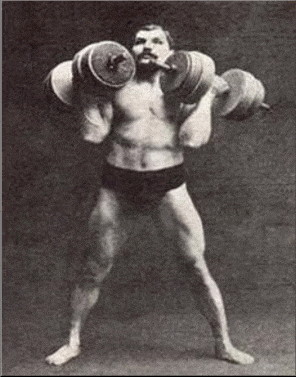
The biggest change I made to my diet was increasing my fat and cholesterol intake. There’s a reason why old school strong men would drink raw eggs — studies have suggested that higher fat and cholesterol consumption results in increased levels of total T; men eating low-fat diets typically have decreased testosterone levels. The emphasis on increasing fat and cholesterol consumption meant I got to eat like Ron Swanson for three months — bacon and eggs and steak was pretty much the staple of my diet.
But you might be asking, “Isn’t cholesterol bad for you? Doesn’t it cause heart disease?”
Answer: It’s complicated.
I don’t have enough time or space to cover the ins and outs of cholesterol in this post, but overall, research is showing that popular beliefs about cholesterol aren’t completely correct and the public shouldn’t be as afraid of this molecule as it is.
If you’re interested in learning more about the myths and benefits of cholesterol, I highly recommend reading these in-depth, well-written, and well-researched articles at Mark’s Daily Apple:
- The Definitive Guide to Cholesterol
- The Straight Dope on Cholesterol Part 1
- The Straight Dope on Cholesterol Part 2
For those interested, at the end of this section, I share my cholesterol and triglyceride levels after more than four months of eating copious amounts of bacon, eggs, meat, and nuts.
Now here’s a breakdown of what I ate at each meal:
Breakfast – “Give Me All the Bacon and Eggs You Have”
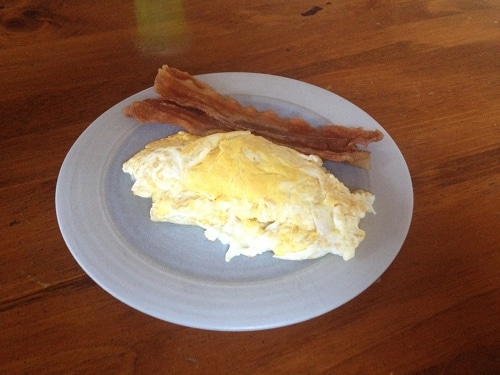
During the weekdays, I ate what I called the “Ron Swanson Special” — three slices of bacon and three whole eggs. Aside from being delicious, it also provided the fats and cholesterol my body needed to make testosterone. Nitrates freak me out, so I used nitrate-free bacon.
On Saturday mornings, Gus and I went to Braum’s — pancakes for Gus; breakfast burrito for me. That’s one of our father/son traditions.
Sundays I typically skipped breakfast – I usually just wasn’t hungry.
Lunch – The Man Salad
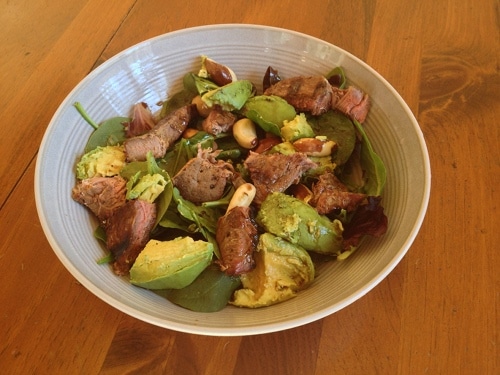
I know Swanson wouldn’t approve, but for lunch each weekday (and sometimes on Saturday) I ate a salad. But it wasn’t just any salad, it was a Man Salad damnit! I packed as many T-boosting foods as I could into this thing.
- Spinach/Spring Salad Mix. This was the base of my salad. I used Organic Girl Greens from Whole Foods. Yeah, I know. The base of my Man Salad came from a company called Organic Girl. Spinach and other leafy green vegetables contain minerals like magnesium and zinc, which have been shown to aid in testosterone production (study on magnesium, and another; study on zinc)
- Meat. Meat, particularly beef, provides our bodies with the protein it needs to create muscle (more muscle = more T) and the fats and cholesterol to make testosterone. My meat topping of choice was sliced up chuck steak. I grilled two of them on Monday and it lasted me until the next Monday. Every now and then I’d slow-cook some ribs or brisket to use as my meat topping. My philosophy was the fattier, the better.
- Nuts. Usually a handful of Brazil nuts or walnuts. Nuts are little fat bombs that provide the cholesterol that Leydig cells need for T production. One study suggest that the selenium in Brazil nuts boosts testosterone. Just don’t go crazy with them. Too much selenium is no bueno.
- Avocado/Olives. Avocados and olives are a great source of the good fats we need for healthy testosterone production.
- Broccoli. Every now and then I’d throw some broccoli into the salad. Broccoli contains high levels of indoles, a food compound that has been shown to reduce the bad estrogen in our bodies that sap testosterone levels.
- Olive Oil. I topped my Man Salad off with lots of olive oil. Research suggests that olive oil helps your Leydig cells (which produce testosterone) absorb cholesterol better. And as I’ve mentioned a few times, our Leydig cells need cholesterol to make T. More cholesterol absorption = more testosterone.
- Balsamic Vinegar. Mostly for taste. It’s also supposed to help keep your insulin in check.
I bought most of the ingredients for my Testosterone Salad at Whole Foods. For those curious, I added up all the ingredients and divided by six (I typically ate six of these salads in a week). The cost per salad was roughly $5. That’s about the price many folks pay every day for a crappy fast food meal. If you’re on a budget, I’m sure you could get the ingredients at Walmart and bring the cost per salad down even more.
This is what I ate for breakfast and lunch almost every single weekday during my 90-day experiment, and it’s what I continue to eat every weekday more than four months after my experiment began. And I don’t mind at all. I guess I am a pretty boring dude.
Snacks
During the day I tried to snack on testosterone-healthy foods like nuts, pumpkin seeds, and broccoli. I’d throw in some dark chocolate every now and then too.
An added testosterone benefit of my high fat and balanced protein and carb diet was that it probably helped me lose some body fat (I went from 18% to 12% body fat). Studies show that high fat diets actually contribute to increased body fat loss. And as we discussed earlier, as you lose body fat, your T production ramps up. Virtuous cycle for the win!
Dinner – Whatever (in moderation)
I just ate what the family was having: chili, chicken and rice, enchiladas. Whatever. I wasn’t worried too much about carbs. I just watched my portions and tried to stop eating as soon I was full.
With the exception of increasing my fat and cholesterol intake, my diet wasn’t that unconventional. I didn’t follow a strictly low-carb or Paleo diet because recent research has suggested that a diet high in protein and low in carbs actually causes T levels to decrease. With that said, I was judicious with the carbs. I tried to get most of my carbs from veggies and fruit, but I didn’t freak out if my wife made us spaghetti for dinner.
I tried to be really strict with my diet during the week and relaxed it on the weekends. Life’s short. I want to be able enjoy a Triple Stack Sandwich or taquito from QuikTripevery now and then.
I’m a lifelong teetotaler, so alcohol wasn’t on the menu. Some studies have shown that beer can lower your T levels in a few ways, but I imagine it would be fine as a weekend indulgence.
Obviously, you don’t have to follow my exact meal plan. The goal is simply to eat more high-fat foods.
Egads! What did all that eggs and steak do to your cholesterol levels?
I was curious what my cholesterol levels would be after following a diet high in cholesterol and saturated fat, so I got a full lipid screening a little more than four months after I began my experiment. Here are the results:
- Total Cholesterol: 202 mg/dL (Just barely out of the desirable range of < 200 mg/dL.)
- HDL Cholesterol (“Good” Cholesterol): 77 mg/dL (Optimal range is > 60 mg/dL — my HDL levels were great!)
- LDL Cholesterol (“Bad” Cholesterol): 112 mg/dL (This put me in the near or above optimal range of 100-129 mg/dL.)
- Triglycerides: 65 mg/dL (< 150 mg/dL is considered normal; < 100 mg/dL is optimal — mine were downright stellar.)
Looking at the raw numbers, overall my lipid screening was pretty dang awesome.
Total cholesterol was a bit high, but most doctors agree that total cholesterol isn’t a good indicator of heart disease risk.
Things get more interesting when you look at the ratios that doctors use to determine a patient’s risk for heart disease.
- Total cholesterol/HDL Ratio: 2.6:1 (Normal is < 5:1; optimal is < 3.5:1. Mine was optimal.)
- LDL/HDL Ratio: .68:1 (Normal is > .3:1; optimal > .4:1. Mine was optimal.)
- Triglycerides/HDL Ratio: .84:1 (Optimal is < 2:1. Mine was optimal.)
So despite pounding back bacon, eggs, whole milk, and steak for four months, I still had healthy cholesterol levels.
Supplements
Sadly, many guys think they can just pop a few “natural enhancers” and their T levels will magically increase. If you’re eating garbage, not exercising, and not getting enough sleep, no amount of supplements is going to help your testosterone levels reach optimal levels.
With that said, I did include some nutritional supplementation in my experiment. Here’s what I used:
- Vitamin D3. Vitamin D3 actually isn’t a vitamin, it’s a hormone — a really important hormone that provides a whole host of health benefits. Our bodies can naturally make vitamin D from the sun, but recent studies have shown that many Westerners are vitamin D3 deprived because we’re spending less and less time outdoors. When we do decide to venture outside, we slather our bodies with sunscreen, which prevents the sun reaching our skin to kick-off vitamin D3 production. If you’re not getting enough sun, you may have a vitamin D3 deficiency, which may contribute to low T levels. If you think you need more vitamin D3, supplement it with a pill. Studies have shown that men who take this supplement see a boost in their testosterone levels.Because I have a darker complexion — which makes me prone to Vitamin D3 deficiency — I took 4,000 IU of vitamin D3 in the morning.
- Omega-3 Fish Oil. Fish oil has been shown to lower SHBG and increase production of Luteinizing Hormone (the hormone responsible for triggering the testes to produce T). Because of the increased amounts of saturated fats and cholesterol I was consuming, I wanted to make sure I had enough of the “good” fats to clear the gunk out of my blood.
- Whey Protein + Creatine shake. Before my weightlifting workouts I’d mix a scoop of whey protein (I use Jay Robb because it’s all-natural) and a scoop of creatine into unsweetened coconut milk. Just trying to feed my muscles the stuff it needs to rebuild itself after my workout.
- Caffeine. Use caffeine moderately. Too much of the jittery juice increases cortisol, which decreases testosterone. Moreover, consuming caffeine late in the day hurts sleep, which lowers testosterone production. But one recent study indicates that caffeine consumed before working out may boost testosterone levels and help you exercise more efficiently. During my experiment I popped a piece of caffeinated gum five minutes before my workouts. Each piece had 100 mg of caffeine, about the same amount in a cup of coffee. That was usually it for my caffeine intake that day.
- Vitamin C (unnecessary). I don’t know where I first heard about vitamin C’s supposed T-boosting benefits, but it’s one of those things you see all over the internet when you Google “how to increase testosterone.” Without trying to find the research that backs up that claim, I took a vitamin C supplement during my experiment. I later found some research that suggests that vitamin C does increase testosterone levels in diabetic mice, but because I wasn’t diabetic (nor a mouse), I’m not sure how much the vitamin C helped. I’ve actually stopped taking vitamin C supplements. I’m likely getting more than enough with my diet. Unless you have diabetes, you probably won’t see much benefit from this supplement. Don’t waste your money.
- ZMA (unnecessary). So when I researched how to increase testosterone, a supplement called ZMA kept popping up. It’s a blend of zinc, magnesium, and vitamin B6. The purported benefits of ZMA include better and deeper sleep which indirectly is supposed to increase testosterone. Zinc and magnesium are necessary minerals in testosterone production, so a mega-dose should be useful, right? Well, no. I bought some and took it during the duration of experiment. I should have done some more research before I made the purchase. While one study in 1998 showed increased strength among athletes taking ZMA, two recent studies (study 1, study 2) have shown that it has absolutely no effect on total or free testosterone levels. Crap. My advice, unless you have a zinc and magnesium deficiency, no need to waste your money on this.
What about Tribulus and Stinging Nettle?
There are several supplements on the market claiming to be natural testosterone boosters. I get these sorts of things in the mail all time. The companies that produce these products claim that the herbs (typically stinging nettle and tribulus) in their pills increase free testosterone by reducing SHBG. They also throw in some B vitamins for “increased energy and vitality.”
If you read online forums about boosting testosterone, many guys swear by the effectiveness of natural testosterone boosters. The evidence is mixed. A study found that stinging nettle did indeed increase free T in mice, but another study showed no increase in humans. You see the same sort of results with tribulus — works in mice, but not humans.
With the exception of ZMA, I didn’t take any other purported testosterone boosters.
Exercise
Exercise boosts testosterone in two important ways. First, specific types of exercise actually cause our body to produce more testosterone. We’ll talk more about those in a bit. Second, exercise helps to increase muscle mass and decrease body fat. As we’ve discussed previously, adipose tissue converts testosterone into estrogen. The less fat we get, the more T we have.
Lift Weights
If you want to increase testosterone, you’ve got to start lifting – and lifting heavy. No, doing a short circuit with the weight machines won’t cut it.
Here’s what the research says on how to craft your weightlifting routine to maximize testosterone production:
- Use compound lifts. Squats, bench press, deadlift, and shoulder press should be your main lifts. Exercises that work large muscle groups are associated with higher increases in testosterone.
- Go for high volume. Workout volume is determined by the following formula: sets x reps x weight. Studies suggest that higher volume workouts result in higher T production.
- Don’t take each set to failure. It’s okay to push yourself to failure on the very last set,just don’t do it for all your sets.
- Rest for more than a minute and less than two minutes between each set.
Two workout plans that I used that meet most of these criteria were the StrongLifts 5×5and 5/3/1. I primarily used Strong Lifts during the 90-day experiment. I’ve been a fan of the program for years. I recently discovered 5/3/1 and have been pleased with the results I’ve seen with it. I definitely recommend picking up a copy of the book that lays out the program.
HIIT Training
In addition to weightlifting, studies have shown that HIIT workouts can also help boost testosterone levels. For those of you who don’t know, HIIT stands for high-intensity interval training. It calls for short, intense bursts of exercise, followed by a less-intense recovery period. You repeat with the intense/less-intense cycle several times throughout the workout. In addition to increasing T, HIIT has been shown to improve athletic conditioning and fat metabolism, as well as increase muscle strength.
You can find a whole bunch of HIIT workouts online, but the one I used during my 90-day experiment was a simple wind sprint routine. On Tuesdays I went to the football field near my house, marked off 40 yards with some cones, and sprinted as fast as I could. I’d slowly walk back to the starting line, giving my body about a minute to rest, and then I’d sprint again. I typically did 40 sets of 40-yard sprints in a workout. I love sprints.
Don’t overtrain!
It seems like today it’s a badge of honor to train every day until exhaustion. The ethos is to push yourself harder and harder every day. If that’s your philosophy towards exercise, you might be sabotaging your testosterone levels (as well as your 20 Mile March).Studies have shown that overtraining can reduce testosterone levels significantly. Yes, it’s important to exercise hard, but it’s even more important to give your body rest so it can recuperate from the damage you inflicted upon it.
Give yourself at least two days during the week when you don’t do any intense exercise at all. Depending on your workouts, more days off might be in order. I typically took the weekends off from intense exercising. I’d go on a light walk or hike, but that was about it.
Just move more. I tried to be more active throughout the work day. I took breaks every 30 minutes or so to take a walk. I also used a standing desk more often than I usually do.
Get More and Better Sleep
Most Americans today are sleep deprived, which may be a contributing factor to declining testosterone levels in men. See, our body makes nearly all the testosterone it needs for the day while we’re sleeping. That increased level of T that we experience at night is one of the reasons we wake up with “Morning Wood.” (If you don’t have Morning Wood on a consistent basis, you might have low T).
But if you’re not getting enough quality sleep, your body can’t produce testosterone as efficiently or effectively. In one study, researchers at the University of Chicago found that young men who slept less than five hours a night for one week had lower testosterone levels than when they were fully rested. The drop was typically 10-15%.
Not only does sleep boost T, but it also helps manage cortisol, a stress hormone that has been shown to wreak havoc on testosterone levels when present in high amounts.
During the month before my experiment, I was definitely sleep deprived. Some nights I was only getting 4 to 5 hours. Testosterone killer! During my experiment I tried to get 8 to 9 hours of sleep at night as consistently as possible. I had to go to bed earlier, but I was only cutting into time that I would have been using to mindlessly surf the net anyway.
I also took measures to improve the quality of sleep I got. For example, I reduced my exposure to blue light in the evening, reduced my consumption of caffeine in the evenings, and took warm showers before bed. In a future post, I’ll go into more detail about some of the more crazy things I did to improve how well I slept. It was fun.
Manage Stress
When we face stress, our adrenal glands secrete cortisol to prepare our bodies and minds to handle the stressful situation — the primal fight-or-flight response. In small dosages, cortisol is fine and even useful, but elevated cortisol levels for prolonged periods can do some serious damage to our bodies and minds. One area that seems to take a hit when cortisol is high is our testosterone levels. Several studies have shown a link between cortisol and testosterone. When cortisol levels are high, testosterone levels are low; and when testosterone levels are high, cortisol levels are low.
My stress-filled August was likely another factor leading to my low T levels. Knowing about the connection between cortisol and testosterone, I took the following measures to improve my stress management:
- I mediated for 20 minutes a day.
- When I started to feel stressed, I got up and went for a walk.
- I practiced deep breathing exercises.
- I focused on being more resilient in the face of stress.
Avoid Xenoestrogens and Other T-Lowering Chemicals
Many endocrinologists are sounding the alarm about the damaging effects that come with exposure to common household chemicals. Called “endocrine disruptors,” these chemicals interfere with our body’s hormone system and cause problems like weight gain and learning disabilities. One type of endocrine disruptor is particularly bad news for our testosterone levels.
Xenoestrogen is a chemical that imitates estrogen in the human body. When men are exposed to too much of this estrogen-imitating chemical, T levels drop significantly. The problem is xenoestrogen is freaking everywhere — plastics, shampoos, gasoline, cows, toothpaste. You name it and chances are there are xenoestrogen in it. The ubiquitous nature of this chemical in our modern world is one reason some endocrinologists believe that testosterone levels are lower in men today than in decades past. It’s also a reason doctors say the number of boys born with hypospadias — a birth defect in which the opening of the urethra is on the underside of the penis and not at the tip — has doubled. Note to expecting parents: make sure mom stays away from xenoestrogens during the pregnancy.
Despite the stacked deck, I did my best to avoid products that contained xenoestrogens during my 90-day experiment. Here’s what I did:
- Stored food in glassware and never, ever, ever heated food in plastic containers. Most modern plastics contain phthalates. Phthalates are what give plastic their flexibility, durability, and longevity. But they also screw with hormones by imitating estrogen. Because I didn’t want any of those T-draining molecules in my food, I kept all my food in glassware. I also made sure to never heat food in plastic containers, as heat increases the transfer of phthalates into food.
- Avoided exposure to pesticides and gasoline. Sure the smell of gas is manly, but it contains xenoestrogen. Same goes for pesticides. Limit your exposure to these products. If you do come in contact with them, make sure to wash your hands thoroughly.
- Eat organic when possible. Pesticides and hormones that are used in our food can imitate estrogens in our body. When possible, eat organic. If budget doesn’t allow, at least make sure to wash your fruits and veggies before eating and find meat and milk that comes from cows that haven’t been treated with hormones.
- Use natural grooming products. Most grooming products these days contain parabens, another type of xenoestrogen. And by most, I mean more than 75% of all products. To reduce my exposure as much as possible, I became a hippy during my experiment and started using all natural, paraben-free grooming products. You can find most of these items at most health food stores:
- Jason Shampoo
- Grandpa’s Pine Tar Soap
- Tom’s of Maine Toothpaste
- Crystal Rock Deodorant (This deodorant smells good and works pretty well. But by the end of the day you’re going to be kind of stinky. And if you work out the following morning, you’re going to be really stinky. I eventually made the switch back to regular deodorant/antiperspirant post-experiment. Everybody makes trade-offs.)
- Avoid BPA. Studies suggest that BPA, a chemical that lines food cans and thermal printer paper, may reduce testosterone. I reduced my exposure to BPA as much as I could.
More Sex
Testosterone is the fuel that propels our sex drive, but did you know that actually having sex puts fuel in our testosterone tank? That’s right. More sex = more testosterone. So, yeah. Have more sex.
No, I’m not going to share my experience with this part of the experiment.
Cold Baths
Twice a week during my three-month experiment, I took a 15-minute cold bath after my really hard workouts. I did it for a few reasons. I wanted to help with recovery and I was trying to prep myself for the GORUCK Challenge. Another reason was that I thought it could help increase testosterone levels.
The basis for my thinking that T levels could be boosted by cold baths came from a post I wrote a few years ago on the benefits of cold showers. One benefit I found in my research was that they could increase testosterone levels. I mentioned a 1993 study done by the Thrombosis Research Institute in England that found increased T levels after taking a cold shower. Here’s the thing. I can’t find a link to the original source and I can’t find any other studies that support this claim! So without supporting research, I’m unsure of the effects of cold showers on testosterone.
I still found the practice beneficial, invigorating, and helpful in building my self-discipline.
Conclusion
So that’s what I did to double my testosterone levels in three months. No artificial gels, creams, or injections. Nothing top secret or cool. Just discipline and good livin’. I’m still at pretty much this whole regimen five months later, and I don’t see any reason for stopping.
Now a few last caveats and comments:
First, it’s important to note that these tactics and practices to boost testosterone naturally probably won’t work with men who have hypoandrogenism. If the glands and cells responsible for producing testosterone are damaged or defective, no amount of eggs or sleep will help you raise testosterone levels. You’ll likely need to use testosterone replacement therapy to get your T levels to a healthy place.
Next, while testosterone levels do decline with age, this may simply be because the older that men get, the less they take care of themselves – they stop exercising, start putting on weight, and don’t pay as much attention to their diet. A recent study suggests that age-related T decline is not inevitable, and that if you keep living a healthy lifestyle, you can maintain healthy testosterone levels. So if you’re an older guy, try to do all you can as far as lifestyle changes before you get on the prescription T. I don’t mean doing a little cardio a few times a week, using the machines at the gym, and eating “pretty” healthy. Follow the guidelines above, and see what happens first.
Finally, these kinds of posts always bring a deluge of questions, mostly focused on, “Can I make an exception to X?” “Can I sub in A for B?” “What if I can’t do C?”
Tailor the above recommendations to your personal needs and lifestyle. If you’re a vegetarian drop the bacon and steak, but keep the whey protein and eggs. If you have an injury that prevents you from heavy weightlifting, move as much as you can in the way that you can. There are no studies out there which can tell you exactly what will happen if you do X and Y, but not Z. And I certainly can’t tell you either. Don’t be afraid of self-education – that’s how I learned all this – and embrace the idea of conducting your own experiment and being your own test subject. Incorporate as many of the recommendations above as you’re comfortable with, consult your doctor, and track your results.




0 komentar:
Posting Komentar